TRU's Vision Statement
The statement — consisting of Vision, Mission, Values and Strategic Change Goals — sets out the university’s guiding map for the next decade.
The focal point of the statement is the Secwépemc word Kw’seltktnéws, which means we are all related and interconnected with nature, each other and all things. That interconnection was an integral part of the consultation and is at the heart of TRU’s path forward.
We are grateful to Secwépemc Elders from the region who [gave their time and] shared the treasures of language and knowledge by translating the Vision Statement into Secwepemctsín, the language of the Secwépemc People upon whose unceded territory the university is located.

Me7 t̓ekstém re sptínesem-kt kwemtús ell, me7 s7élkstmentem
Me7 yecwmíntem xwexwéyt re stem ntmicw-kt ell nsxwexwiyúlecwems re tmicw t̓ekmín̓tem re university ell nerí7 me7 yi7úcw-et tek me7 w7ec-kt ell - Nek̓úsem-kt - me7 xexewílc xwexwéyt re qelmúcw ne sxwexweyúlecwems re tmicw.
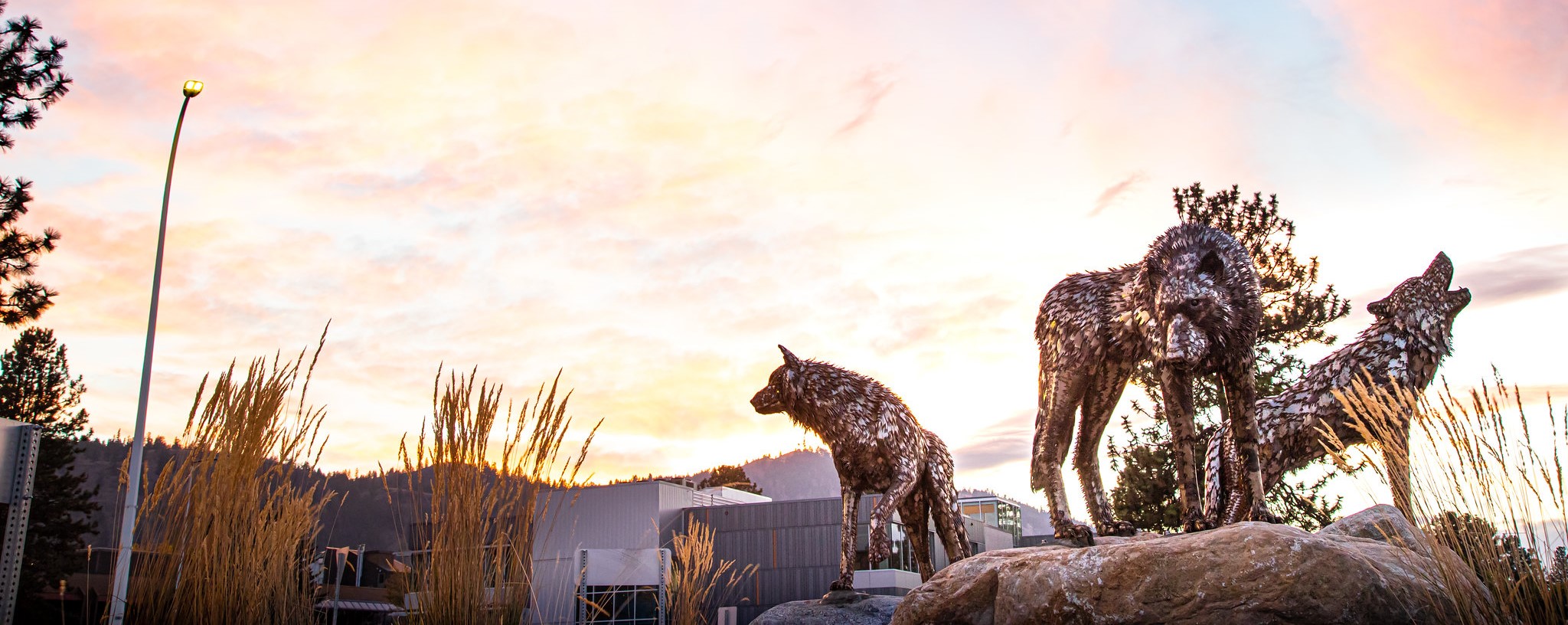
Our vision
Community-minded with a global conscience, we boldly redefine the university as a place of belonging — Kw’seltktnéws (we are all related and interconnected with nature, each other, and all things) — where all people are empowered to transform themselves, their communities, and the world.
Mission, values and change goals
Me7 xílltem tek me7 kúpentem
Tcw7it te tucwt̓ícwell te qelmúcw w7ec ne TRU, me7 w7ec wel me7 xpqenwén̓s stém̓i k qwenmíns e sxpqenwén̓s es xexewílcs ne sxpqenwéllen̓s, t̓hé7en e xílmes éytsell m-wí7es ell e s7éyctem te s7elkst.s.
Me7 Xílltem
Me7 xyemstwécw-kt.
Ta7 me7 t̓ícwells k swetí7.
Knucwentwécw-kt e sle7s e stsyem-kt.
Qwenmíntem es tselxemstém xwexwéyt re stem.
Tknémentem te yucwmíntem re stem ntmicw, tsukw e stens wel me7 yews.
Xyemstém-kucw re qelmúcw ell re k̓wséltktens-kucw. Me7 xyemstwécw-kt.
Nek upeklltyénecwem me7 ckítsentem yi7éne te s7elkt.
Knúcwentem xwexwéyt es xpqenwéllen̓s
Nucwentéls te m-k̓elél̓nemctls le ts̓ucwlém te swestélt.
Kukwpi7stém k stselxmém ell melúk̓wctem te sqlew̓.
Me7 tsq̓ey’ k tsúntem es ctswentém, me7 sten wel me7 yews.
Our mission
TRU is a comprehensive, learner-centred, sustainable university that serves its regional, national, and international learners and their communities through high quality and flexible education, training, research and scholarship.
Our values
Respectful relations define our behaviour. We respect each other (Xyemstwécw), the land, knowledge, the peoples of our region and beyond.
Inclusion and Diversity
Access is open: we welcome students, faculty, staff and communities from our region and around the world to learn from and with one another. We embrace diversity of thought and people. We commit to equity. We continually see the world and its inhabitants in new ways by re-examining our practices and their impacts.
Community-Mindedness
We come together to help one another (Me7 Plúl̓k̓wt es Knucwentwécw-kt). Mutual benefit guides us to connect meaningfully with people in the communities we serve, contributing to an interconnected world where we all share a common future and humanity.
Curiosity
We seek out new ideas and embrace change, understanding they may involve risks. We break paths with creative, critical, yet thoughtful purpose. We push boundaries as a university and encourage students, faculty, staff, and the community to do the same.
Sustainability
The natural world inspires us with wonder and reverence. We recognize how the health of our societies, cultures and ecosystems rests upon wellness of people, biodiversity, and wise stewardship of precious and finite resources. As a world leader in sustainability we know that the well-being of generations to come is shaped by what we do today.
Our 10-year strategic change goals
We are dedicated to fostering equity, honoring reconciliation, advancing research, and supporting lifelong learning for all.
Eliminate achievement gaps
We will support students of all backgrounds to access and succeed in higher education. All groups in our region — including Indigenous learners and rural learners — will achieve in higher education on par with others. We will recruit and retain students to create a balanced community of learners and leaders reflective of Canada and the world.
Honour truth, reconciliation and rights
We will nurture a flourishing relationship with the Secwépemc people on whose lands we reside. Members of our community will give exceptional consideration to Secwépemc world view and belief system. We will support thriving Secwépemc culture through respectful actions in research, teaching and service. Our campuses will honour our First House: Tk’emlúps te Secwépemc, respect our Second House: T’exelc, acknowledge the many Nations who live and work on and near these lands, and support provincial, national and global movements for the fulfillment and recognition of Indigenous rights.
Lead in community research and scholarship
We will support all faculty members in knowledge-seeking, knowledge creation, and creative inquiry. We will earn recognition as the most committed and innovative university in Canada for research and scholarship based on community partnerships; for involving graduate students in community-centred research; and for undergraduate research training.
Design lifelong learning
We will adapt and combine modes of learning, teaching, and practical experience to create a seamless and integrated set of educational encounters that meet the changing needs of learners from early childhood to elderly years. We will design the map on which individual learners can chart their personal journeys to develop relevant knowledge when they need it, in the forms they can best access, while starting, stopping and returning as often as they need.
We acknowledge and give honour to the Secwépemc, the ancestral peoples who have lived here for thousands of years. We honour our First House, on whose unceded land our Kamloops campus is located: Tk’emlúps te Secwépemc, and respect our Second House: T’exelc, on whose unceded land our Williams Lake campus is located. In addition we recognize and respect neighbouring Indigenous nations whom we serve — the St’át’imc, Nlaka’pamux, Nuxalk, Tŝilhqot'in and Dakelh. Our understanding of TRU’s obligations to our hosts is informed by the guidance of interior BC Indigenous leaders to Sir Wilfrid Laurier in 1910.